The Rise of the One-Person Powerhouse: How AI is Redefining Entrepreneurship
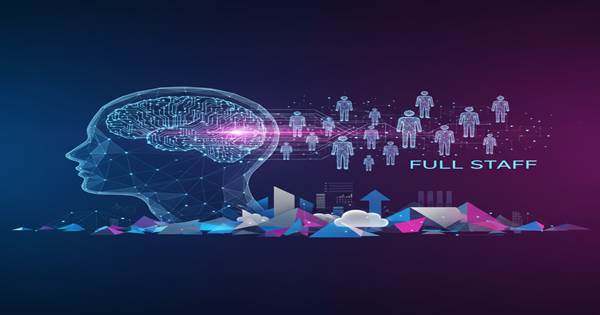
The image of the solo founder often conjures up a picture of relentless struggle: late nights, endless tasks, and a constant battle against limited resources. Historically, scaling a business meant hiring, expanding, and building a team, a process fraught with financial risk and management overhead. However, a seismic shift is underway, driven by the exponential advancements in artificial intelligence. AI is no longer a futuristic concept; it's a powerful operational partner, transforming solo founders into what effectively functions as full-staffed companies.
This isn't about replacing human ingenuity, but augmenting it to an unprecedented degree. AI is democratizing access to capabilities once reserved for large enterprises, enabling individuals to launch, operate, and scale businesses with agility and efficiency previously unimaginable. The entrepreneurial landscape is being reshaped, creating a new breed of highly leveraged solo ventures that punch far above their weight.
Your AI "Co-Founders": Automating Core Business Functions
Imagine having a marketing team, a customer service department, a data analyst, and a content creator, all working tirelessly and efficiently, without a single salary on your payroll. This is the reality AI offers solo founders. AI-powered tools are now capable of handling a vast array of core business functions, freeing up the founder to focus on strategic vision, innovation, and high-value tasks.
Consider content creation. Generating blog posts, social media updates, email newsletters, and even video scripts can be a monumental task for one person. AI writing assistants can draft compelling copy, research topics, and even optimize content for search engines, all in a fraction of the time it would take a human. This doesn't mean AI replaces the creative spark; rather, it handles the grunt work, allowing the founder to refine, personalize, and inject their unique voice.
Similarly, customer service, a critical component of any business, can be largely automated. AI chatbots can handle routine inquiries, provide instant support, and even qualify leads, ensuring customers receive timely assistance 24/7. This not only improves customer satisfaction but also reduces the burden on the founder, preventing them from being constantly tethered to support tickets. For more complex issues, the AI can seamlessly escalate to the founder, ensuring a personalized touch when truly needed.
The Virtual Office Revolution: AI as Your Operational Backbone
The traditional office environment, with its cubicles and water coolers, is increasingly becoming a relic of the past. For solo founders, the concept of a virtual office has always been a reality, but AI is elevating it to an entirely new level of sophistication. AI acts as the operational backbone, managing workflows, organizing data, and ensuring seamless communication, even when there's only one human in the loop. Platforms like aiworkers.co are leading this transformation.
Task management and project coordination, often a headache for solo operators, are streamlined by AI-powered project management platforms. These tools can automate task assignments, track progress, set reminders, and even identify potential bottlenecks, all without requiring constant manual oversight. This creates a highly organized and efficient work environment, even if that environment is a single laptop in a home office.
Furthermore, data analysis, a crucial aspect of informed decision-making, is no longer exclusive to companies with dedicated analytics teams. AI-powered data analysis tools can sift through vast datasets, identify trends, generate insights, and even predict future outcomes. This empowers solo founders to make data-driven decisions about their marketing strategies, product development, and operational efficiencies, giving them a competitive edge typically associated with larger organizations. Imagine an AI "CFO" analyzing your financial data and flagging potential issues or opportunities.
AI Workers: Expanding Your Capacity Without Expanding Your Headcount
The most transformative aspect of AI for solo founders is the ability to effectively "hire" an unlimited number of AI workers. These aren't sentient beings, but highly specialized software agents designed to perform specific tasks with speed and accuracy. Each AI tool you integrate into your workflow acts as a virtual employee, taking on responsibilities that would traditionally require a human.
Consider a solo e-commerce founder. Their "staff" might include an AI product description generator, an AI image optimizer, an AI advertising campaign manager, and an AI inventory management system. Each of these AI "workers" handles a specific, time-consuming task, allowing the founder to focus on sourcing products, strategic partnerships, and brand building. This distributed workforce, composed entirely of AI, allows for unprecedented scalability without the associated overhead of human resources.
The beauty of these AI workers lies in their tireless nature and consistency. They don't get sick, they don't take holidays, and they perform their tasks with unwavering precision. This ensures a consistent level of quality and output, a significant advantage for a solo founder striving to maintain high standards across all aspects of their business. The solo founder becomes the conductor of an AI orchestra, orchestrating a complex symphony of automated processes.
Leveraging AI for AI Solo Founder Full Staff: Practical Strategies
For solo founders looking to harness the power of AI and effectively build their "full staff," a strategic approach is essential. It’s not about blindly adopting every new AI tool, but rather identifying pain points and strategically integrating AI solutions that address them.
1. Identify Repetitive Tasks: Start by auditing your daily, weekly, and monthly tasks. Which ones are repetitive, time-consuming, and don't require high-level human judgment? These are prime candidates for AI automation. This could include scheduling social media posts, responding to common customer queries, generating reports, or drafting initial email communications.
2. Prioritize High-Impact Automation: Focus on automating tasks that will have the biggest positive impact on your time, efficiency, or revenue. For example, if customer support is consuming a significant portion of your day, investing in an AI chatbot will yield substantial returns. If content creation is a constant bottleneck, an AI writing assistant will be invaluable. For example, Buddy – the AI marketing agent demonstrates exactly how this works in practice.
3. Embrace a "Test and Iterate" Mindset: AI tools are constantly evolving. Don't expect perfection from day one. Experiment with different platforms, evaluate their performance, and be prepared to adjust your workflows. Start small, learn what works best for your specific business, and gradually expand your AI-powered "staff."
4. Become a "Prompt Engineer": Interacting effectively with AI, especially generative AI, often requires skillful "prompt engineering." Learning how to craft clear, concise, and detailed prompts will significantly improve the quality and relevance of the AI's output. Think of it as training your AI "employees."
5. Integrate and Streamline: The true power of AI for solo founders comes from integrating various tools into a cohesive workflow. Use automation platforms to connect different AI applications, allowing data to flow seamlessly between them. This creates a truly automated ecosystem where your AI "staff" communicates and collaborates efficiently.
6. Focus on Strategic Oversight: With AI handling the operational heavy lifting, your role as a solo founder shifts. You become the strategic visionary, the creative director, and the ultimate decision-maker. Your time is freed up for market research, product innovation, building relationships, and long-term planning – tasks that truly require human intuition and strategic thinking.
The Future is Lean and Agile
The implications of AI for solo founders are profound. It's creating an environment where a single individual can launch and operate a global business with the reach and efficiency of a small to medium-sized enterprise. The barriers to entry are significantly lowered, and the potential for rapid scaling is dramatically increased. This doesn't mean the end of human teams, but it certainly redefines what a "team" can look like.
The future of entrepreneurship is lean, agile, and incredibly powerful. Solo founders, armed with AI, are no longer constrained by the limitations of their own two hands. They are empowered to build, innovate, and compete on a playing field that was once exclusively dominated by well-funded corporations. The era of the one-person powerhouse is here, and AI is its enabling force.
Conclusion
The transformation of solo founders into full-staffed companies, powered by artificial intelligence, is one of the most exciting developments in modern entrepreneurship. By strategically leveraging AI tools for automation, operational efficiency, and virtual assistance, individuals can achieve unprecedented levels of productivity and scale. This shift not only democratizes business ownership but also allows founders to focus on their core passions and strategic vision, ultimately leading to more innovative and impactful ventures. The solo founder of today is not alone; they are surrounded by an intelligent, tireless, and ever-expanding AI "staff" that enables them to turn ambitious dreams into tangible realities.